Cartier
Cartier Tank Française Large Model
28 mm X 32 mm · Automatic · 1990s
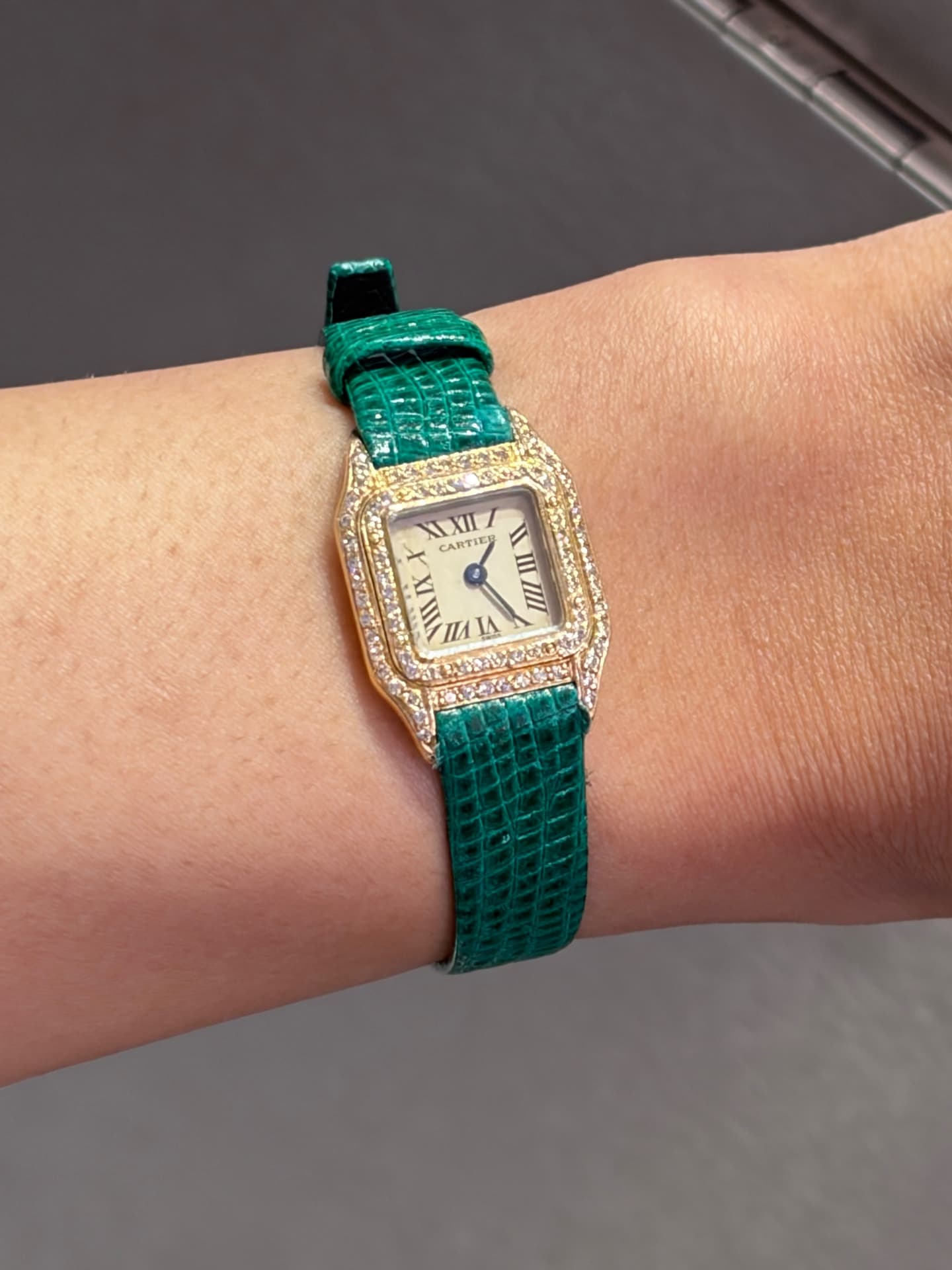
Introduced in 1996, the Tank Française revolutionized the Tank family by seamlessly integrating a curved case onto a link bracelet. This specific reference is a highly sought-after execution in solid 18k yellow gold, featuring a date window at the 6 o'clock position. The example shown has been paired with a textured blue lizard/exotic leather strap rather than its traditional full gold bracelet.
Specifications
Questions about this piece? Call +1 (917) 828-1306, email watchbyjuls@gmail.com or visit us at 36 West 47th Street, W8-9, New York City.
Box and papers. Where a piece includes them, the listing says so. If they are not mentioned, please assume they are not supplied — ask us and we will confirm exactly what accompanies this watch.
Winding & servicing
- An automatic movement winds itself through the motion of your wrist. Worn daily, it will keep running; left idle it will stop after roughly 40–48 hours and simply needs a gentle shake or 20–30 manual turns of the crown to restart.
- A watch winder is optional. If you use one, choose a low rotation setting — continuous high-speed winding adds needless wear.
- Plan a full service every 5–7 years. A movement that is losing or gaining more than a few seconds a day, or that sounds gritty when wound, should be seen sooner.
Daily wear
- Avoid operating the crown or pushers while the watch is wet, and always ensure the crown is fully pushed in (or screwed down) before contact with water.
- Remove the piece before swimming in chlorinated or salt water, using a sauna or hot tub, and before contact sport or manual work. Sudden temperature change and impact are the two things a fine movement tolerates least.
- Keep it away from strong magnets — laptop speakers, tablet covers, handbag clasps and induction hobs are the usual culprits. Magnetisation shows up as a watch suddenly running fast, and is easily reversed by a watchmaker.
Cleaning
- Wipe the case and bracelet with a soft, dry microfibre cloth after each wear to lift skin oils and dust before they build up in the joints.
- Keep the leather strap dry. Leather and water are not friends: repeated wetting causes the strap to stiffen, crack and eventually separate at the stitching. A well-worn strap is a consumable — plan on replacing it every 1–2 years of regular wear.
- Gold is a soft metal and will pick up fine hairline marks with wear. This is normal and part of the character of a worn piece; a professional polish can reduce them, but every polish removes a little material, so it is best done sparingly.
- Never use ultrasonic cleaners, solvents, or commercial jewellery dips at home on a watch — they can strip lume, degrade gaskets and damage set stones.
Storage
- Store in a dry place at stable room temperature, away from direct sunlight — prolonged UV fades dials and ages strap leather.
- Keep pieces separated in a lined box or soft pouch so cases and stones cannot rub against one another. Diamond is hard enough to scratch virtually anything it shares a drawer with.
- Retain any documentation supplied with the piece — provenance materially affects resale value.
Water resistance
- Water resistance is a seal condition, not a permanent specification. Gaskets harden and shrink with age, so a rating stamped on the case back decades ago tells you little about the watch today.
- Have the case pressure-tested annually, and always after the case back has been opened for any reason.
- Vintage pieces should be treated as not water resistant regardless of their original rating.